
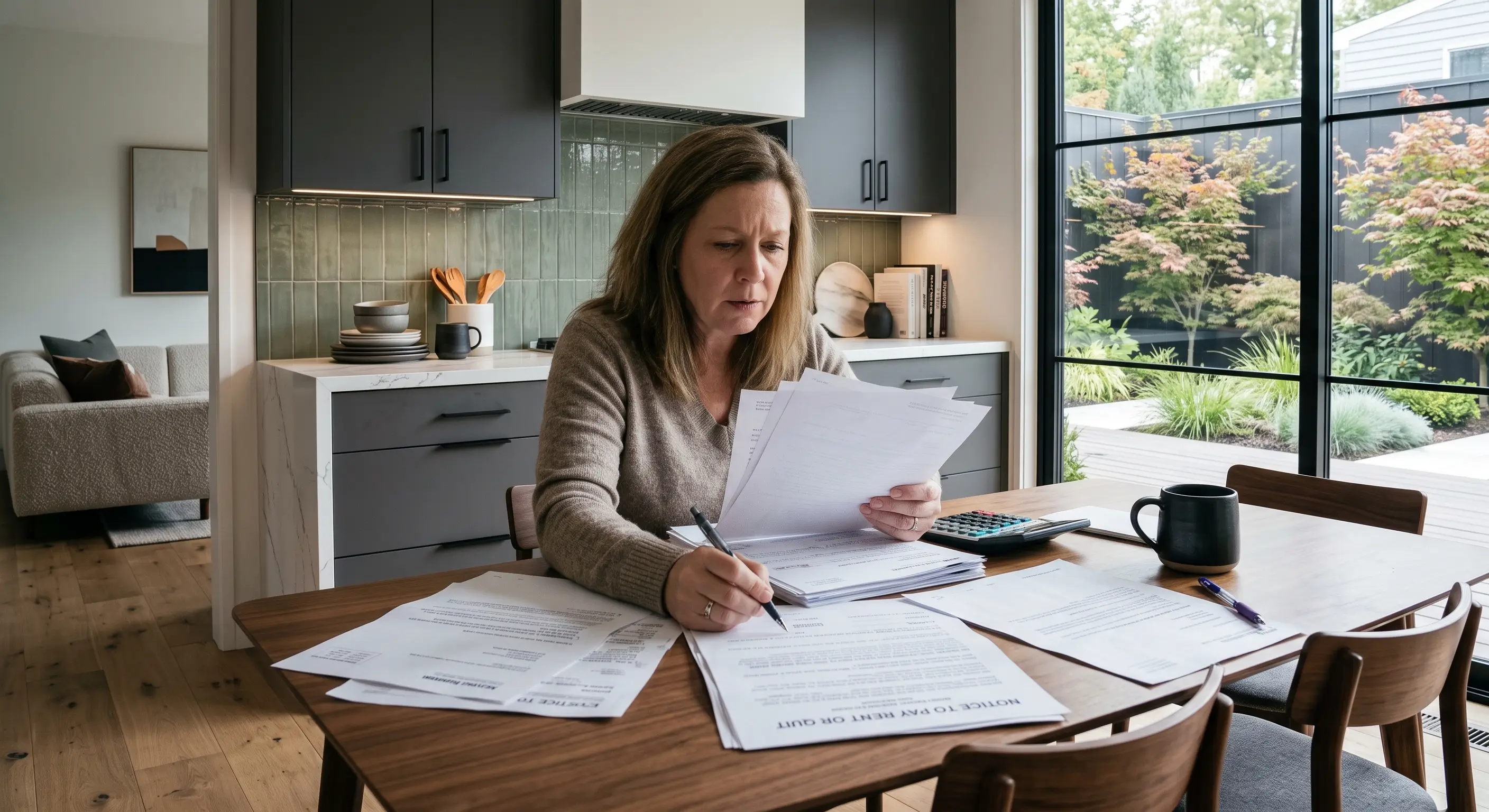
Naperville's rental market has gotten more competitive over the past few years, and that pressure changes how owners handle problems when they show up. PMI West Suburban has noticed that owners under pressure to keep a unit filled often let things slide that shouldn't, and our look at protecting your investment gets into why that instinct usually backfires.
Key Takeaways
- Small, unaddressed rental issues often grow into eviction filings and lost income.
- Maintenance delays are one of the clearest early warning signs owners overlook.
- Weak screening at move-in makes later conflicts more likely and harder to resolve.
- Consistent documentation strengthens an owner's position if a dispute ever reaches court.
- Professional oversight catches these patterns early, protecting the property and the bottom line.
Late Rent Payments That Go Unaddressed for Too Long
A tenant misses a payment, and the owner extends the benefit of the doubt. It happens again the next month, and by the time the pattern is undeniable, months of unpaid rent have piled up. Illinois has procedural requirements for removing a tenant, and skipping a step early can delay a case for months.
A more reliable approach follows a consistent sequence:
- Send written notice immediately after the due date passes, rather than a verbal reminder.
- Log every missed payment, partial payment, and promise to pay in a dated record.
- Apply the same notice timeline to every tenant, without exceptions.
- Escalate to formal legal notice once a defined threshold, such as two missed payments, has been reached.
Nationally, landlords filed 1.23 million eviction cases in 2025 across the tracked cities and states, and many of those filings began with exactly this kind of overlooked late payment.
Minor Lease Violations Owners Choose Not to Enforce
An unauthorized pet, an extra occupant, or a repeated parking violation might feel minor in isolation, but each one that goes unaddressed makes the next violation easier for a tenant to justify. Over time, these small compromises stack up until an owner is dealing with a tenant who has stopped following the lease altogether.
Protecting the investment itself starts with consistent enforcement. Our guide on how property management protects your investment covers why owners who skip this step often end up dealing with larger issues down the road.
Maintenance Requests That Sit for Weeks Without Follow-Up
A maintenance request that sits for weeks rarely stays a small problem. Delayed repairs compound, turning a manageable fix into a costly one and straining the trust between owner and tenant.
A Small Roof Leak Reported and Then Forgotten
A tenant mentions a water stain on the ceiling, and the request never gets scheduled. Weeks later, the drywall is soft, and the quick patch has turned into a repair involving insulation and possible mold remediation.
An HVAC Complaint Pushed to Next Week
A tenant reports weak air conditioning in early summer, and the owner assumes it can wait. By the time a technician arrives, the unit has failed during a heat wave, turning a routine service call into an emergency repair.
A Running Toilet or Dripping Faucet Left Unaddressed
These issues rarely feel urgent, so they sit. A running toilet wastes water and inflates utility bills, while a slow drip can damage flooring or cabinetry underneath. A five-minute fix becomes a multi-day repair once nearby materials are affected. Industry data backs this up, with one benchmark finding that general maintenance requests took a median of 14.8 days to close across the single-family rental sector.
Owners looking to stay ahead of these delays can rely on our maintenance services to keep requests from sitting untouched.
Tenant Screening Shortcuts Taken Before Move-In
Many of the problems owners deal with later actually trace back to decisions made before a tenant ever moved in. A rushed application review can put a difficult tenant in a property, and that difficulty tends to surface gradually, often months into the lease when it's much harder to address.
This matters even more for owners navigating a purchase for the first time. Our piece on what comes after buying a rental property covers how screening decisions made in those early months set the tone for everything that follows.
Owner-Managed Properties Without Consistent Oversight
A less obvious but equally common pattern is simply the absence of consistent tracking. Owners managing on their own often don't notice a problem until it's already serious.
- Payment records get kept in a notebook or scattered texts, making a missed payment easy to forget.
- Maintenance requests come in by phone with no written log, leaving no record of how long an issue has been open.
- Lease violations get noticed but never documented, leaving nothing to point to later in a dispute.
- Communication happens inconsistently across text and email, creating gaps that are easy to overlook.
Building strong relationships with tenants also plays a role here. Our retention playbook for landlords shows how consistent tracking and clear communication tend to go hand in hand.
Professional oversight closes that gap. PMI West Suburban continuously tracks payment history, maintenance requests, and lease compliance, so small issues get flagged while they're still manageable. Owners who want a clearer picture of where those gaps currently sit can start with a free rental analysis.
FAQs about Escalation Patterns in Naperville, IL
How do I know if a tenant's request for flexibility is reasonable or a warning sign?
A one-time request tied to a specific circumstance is usually reasonable, but recurring requests suggest a pattern worth addressing. Track every accommodation in writing so you can spot repetition before it becomes an expectation.
Does the size of my rental portfolio change how strictly I should document issues?
No. A single unit carries the same legal exposure as a larger portfolio if a dispute escalates, so documentation habits should stay consistent regardless of how many properties an owner manages.
What's the best way to communicate a lease violation without damaging the relationship?
Stick to facts and reference the specific lease clause involved rather than framing it personally. Clear, calm communication tends to preserve the relationship better than vague warnings or delayed confrontations.
How do local market conditions affect how quickly I should respond to lease issues?
A tighter rental market gives owners more leverage to enforce terms without fear of prolonged vacancy. A looser market sometimes tempts owners toward leniency, which often creates larger problems later.
Can a tenant's history with previous landlords predict how they'll handle a lease?
It often provides useful context, though it isn't a guarantee. Verified references combined with current financial stability give a more complete picture than rental history alone.
Making Consistency the Standard, Not the Exception
Naperville rental properties rarely run into serious trouble overnight. A missed payment, an unenforced lease term, or a maintenance request left too long usually gives plenty of warning before things get expensive, and owners who catch that warning early save themselves a lot of hassle.
PMI West Suburban builds that kind of attention into how we manage every property we oversee. When a tenant situation has already moved past what a conversation can resolve, start the eviction process with a team that knows how to handle it correctly.